
Getting Sick & Staying Strong
Getting sick is part of being human. It doesn’t mean you’ve failed or done something wrong — it means your body is responding, adapting, and learning. What matters isn’t avoiding illness at all costs, but how well your system can respond, recover, and come back stronger.
We see health as resilience. And one of the most powerful ways to build that resilience is through consistent, active movement.
Understanding Your
Immune System
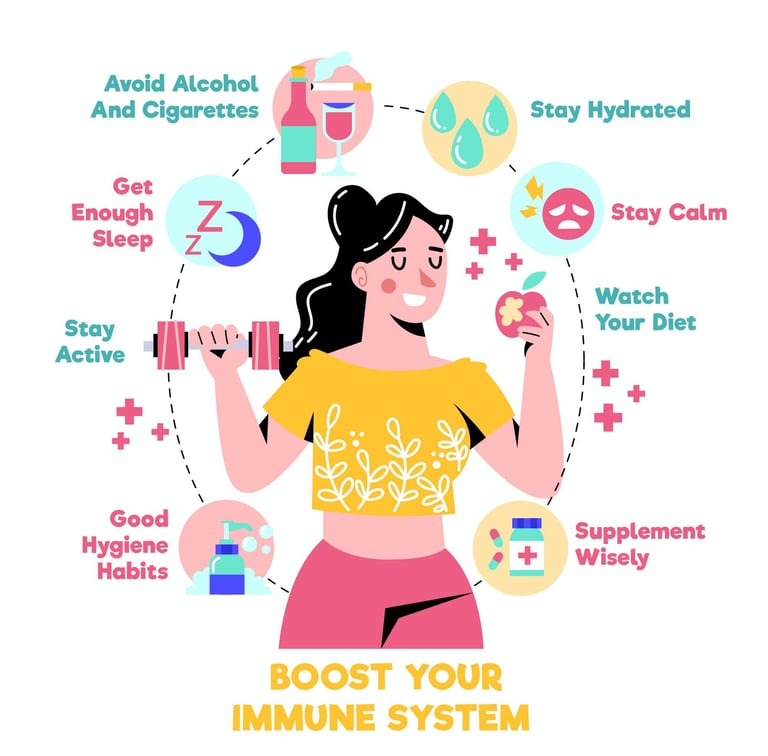
Your immune system is not a switch you turn on or off. It’s a complex, adaptive network influenced by:
Movement and circulation
Stress levels
Sleep and recovery
Breathing quality
Lifestyle consistency
When these systems are supported, your immune response becomes more efficient. When they’re overloaded or neglected, recovery takes longer.
Why Movement Matters for Immune Health
Active movement doesn’t prevent illness completely — but it helps your body respond better when challenges arise.
1. Movement improves circulation
Regular movement increases blood flow, helping immune cells travel more efficiently throughout the body.
2. Movement supports the lymphatic system
The lymphatic system plays a key role in immune defense, and it relies on movement to function properly. Walking, stretching, and gentle exercise help keep it flowing.
3. Movement regulates stress
Chronic stress weakens immune response. Movement helps lower stress hormones and calm the nervous system.
4. Movement improves recovery capacity
Consistent activity supports better sleep, hormonal balance, and tissue repair — all essential for immune health.
5. Movement builds overall resilience
A body that moves regularly adapts better to physical and mental stressors.
Moving When You’re Getting Sick
Movement doesn’t mean pushing hard when your body needs rest. The key is listening.
When you feel early signs of sickness:
Choose gentle movement
Walk, stretch, breathe
Focus on mobility and circulation
Avoid intensity and exhaustion
Light movement can support recovery — forcing workouts can delay it.
Don’t Wait Until You’re Sick to Take Care of Yourself
Immune health isn’t built during illness — it’s built daily.
You don’t need extreme routines or perfect habits. You need consistency:
Move your body most days
Manage stress through physical release
Breathe deeply and often
Respect recovery
These small actions create a strong foundation long before you need it.
APE Immune Support Practice
Try this daily:
10–20 minutes of easy movement
5 minutes of stretching
3 minutes of deep breathing
Simple. Repeatable. Sustainable.
Your Reflection
Ask yourself:
Am I supporting my body daily, or only when something goes wrong?
The body remembers how you treat it over time.
Final Thought
Getting sick is sometimes unavoidable. Staying strong is a practice.
Movement won’t replace rest, nutrition, or sleep — but it plays a powerful supporting role. By moving consistently and intelligently, you help your immune system do what it’s designed to do.
Move gently.
Move consistently.
Build resilience from the inside out.
Subscribe
Follow the movement and stay updated for comming events , offers and the competitions


Follow us
All Rights reserved ©