Recovery: Where Growth Actually Happens
We often focus on doing more. More training. More effort. More pushing forward. But real progress doesn’t only come from what you do — it comes from how well you recover.
Recovery isn’t a break from growth. It is growth.
At APE, we believe that active movement plays a key role in recovery, helping your body reset, rebuild, and come back stronger.
What Recovery Really Means
Recovery is not just rest or doing nothing. It’s the process where your body:
Repairs muscles
Reduces tension
Restores energy
Balances your nervous system
Without proper recovery, even the best training can lead to fatigue, stiffness, and burnout.
Recovery is what allows you to stay consistent over time.
Why Doing Nothing Isn’t Always the Answer
Rest is important — but complete inactivity can sometimes slow recovery.
When you don’t move at all:
Circulation decreases
Muscles stiffen
Joints become less mobile
Energy levels drop
This is where active recovery becomes powerful.
How Active Movement Supports Recovery
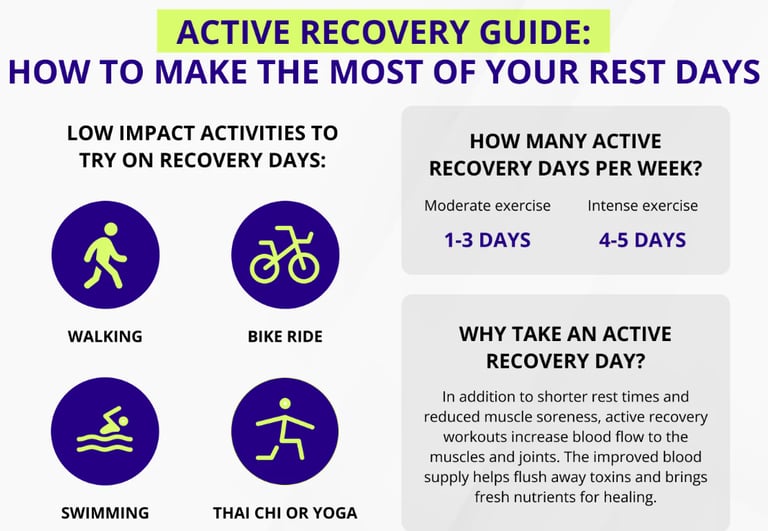
Active movement means low to moderate intensity movement that helps your body recover without adding extra stress.
1. Movement improves circulation
Light activity helps deliver oxygen and nutrients to muscles while removing waste products more efficiently.
2. Movement reduces stiffness and tension
Gentle stretching and mobility work keep joints and muscles flexible, preventing tightness.
3. Movement supports the nervous system
Slow, controlled movement combined with breathing helps your body shift into a more relaxed state.
4. Movement speeds up recovery between sessions
Instead of feeling heavy or sore for days, your body resets faster.
5. Movement keeps you consistent
Even on recovery days, you stay connected to your routine without overloading your system.
What Active Recovery
Can Look Like
Recovery doesn’t need to be complicated or time-consuming.
You can:
Go for a relaxed walk
Do mobility or stretching routines
Practice slow bodyweight movements
Focus on breathing and gentle flow
The goal is not to push — it’s to support.
Listening to Your Body
Recovery is also about awareness.
Some days your body needs more rest.
Other days it benefits from light movement.
Learning to listen — instead of forcing intensity — is a key part of long-term health.
Ask yourself:
Do I need to push today, or do I need to restore?
A Simple APE Recovery Practice
On your recovery days:
Move for 10–20 minutes
Keep intensity low
Focus on breath and smooth movement
Finish with a few deep breaths
Let your body guide the pace.
Final Thought
Recovery is not weakness.
It’s not slowing down your progress.
It’s what makes progress possible.
Active movement helps you recover smarter, not just harder. It keeps your body ready, your mind clear, and your energy balanced.
Train hard when needed.
Recover with intention.
And let your body grow stronger through both.
Subscribe
Follow the movement and stay updated for comming events , offers and the competitions

Follow us
All Rights reserved ©