
Running: More Than Cardio
Running is one of the most natural forms of movement. No complex equipment. No complicated setup. Just you, your breath, your body, and the ground beneath your feet. But like any form of movement, how you approach it makes all the difference.
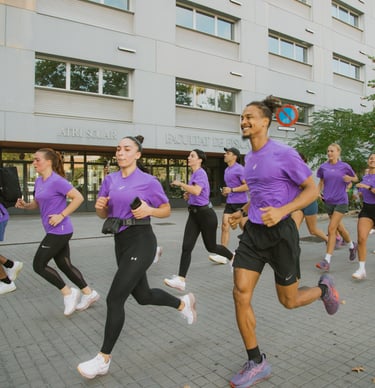
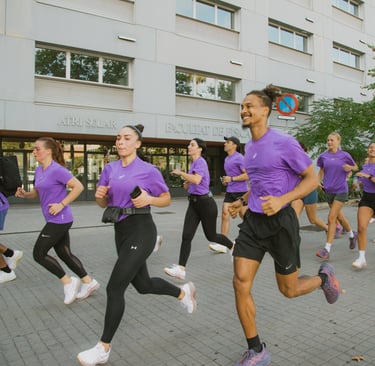
Running Is Simple
But Not Always Easy
Running can feel freeing on some days and heavy on others. It challenges your lungs, your legs, your focus, and your patience.
What it teaches you:
How to regulate your breathing
How to manage discomfort
How to pace yourself
How to stay present when it gets tough
And these lessons extend far beyond the run itself.
Why Active Movement
Supports Better Running
Running is movement — but it thrives when supported by other types of intentional activity.
1. Strength Training Improves Efficiency
Strong glutes, core, and legs reduce unnecessary strain and improve running form. Strength supports longevity.
2. Mobility Reduces Injury Risk
Healthy ankles, hips, and feet allow smoother movement patterns. Mobility keeps your stride natural and pain-free.
3. Breathwork Enhances Endurance
Learning to control your breath helps regulate pace and calm the nervous system during effort.
4. Walking Builds a Foundation
Consistent walking improves circulation, joint health, and aerobic capacity — all essential for running.
5. Recovery Movement Keeps You Consistent
Light stretching and gentle sessions between runs help your body recover and adapt.
Running alone can feel intense. Running supported by balanced movement becomes sustainable.
The Mental Side of Running
Running mirrors life.
You start motivated.
Then it gets uncomfortable.
You question yourself.
You adjust your pace.
You decide whether to stop or continue.
Every run strengthens your ability to stay calm under pressure. It teaches resilience — not by forcing speed, but by encouraging steady progress.
You don’t need to run fast.
You need to run present.
Don’t Wait to “Be Ready”
Many people say:
“I’ll start running when I’m fitter.”
“I’ll begin when I have the right shoes.”
“I’ll run when I have more time.”
But readiness comes from starting. Slowly. Intentionally. Consistently.
You can begin with:
Short intervals of walking and jogging
Gentle pace runs
Soft surfaces
Small distances
Running doesn’t have to be extreme. It has to be honest.
A Simple APE
Running Approach
If you’re starting or restarting:
Warm up with 5 minutes of walking
Alternate 1–2 minutes of light jogging with walking
Focus on relaxed breathing
Finish with mobility and stretching
Build gradually. Listen to your body. Let progress come naturally.
Final Thought
Running is not about proving anything.
It’s about rhythm. Breath. Persistence.
When supported by balanced, active movement, running becomes more than exercise — it becomes a tool for clarity, strength, and self-trust.
Start where you are.
Move with awareness.
Let each step carry you forward.
Subscribe
Follow the movement and stay updated for comming events , offers and the competitions


Follow us
All Rights reserved ©